AquaVR: Immersive Ocean Education Through Virtual Reality:
A Digital Innovation for Marine Awareness and Inclusion
Project Overview
Marine ecosystems are often difficult to access for many individuals, particularly students, inland communities, and differently-abled persons. This limits awareness and understanding of ocean conservation issues such as coral bleaching, biodiversity loss, and climate change. The AquaVR project addressed this gap by:
Bringing the ocean directly to classrooms and communities
Using immersive 360° underwater videos
Creating an interactive and engaging learning experience
This initiative was jointly designed and implemented by CGC and EMCL, combining technology, science, and education to make marine conservation accessible to all.
Objectives
The project aimed to:
Develop immersive 360° underwater VR educational content
Increase awareness of: coral reef ecosystems, marine biodiversity, environmental threats (e.g., coral bleaching)
Provide inclusive access to ocean education, especially for differently-abled students
Promote innovative tools for environmental education and outreach
Demonstrate a scalable model for digital conservation education
Approach & Methodology
The AquaVR project was implemented through a two-component approach, jointly delivered by CGC and EMCL:
1. VR Content Development (Led by EMCL). Eco Marine Consultants Ltd (EMCL) was responsible for:
Filming 360° underwater videos using specialised equipment
Producing immersive VR content compatible with smartphones and VR headsets
2. Education & Awareness (Led by CGC). Coral Garden Conservation (CGC) implemented:
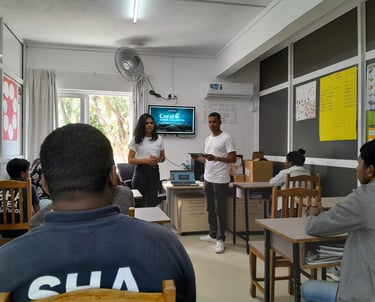
Awareness and sensitisation sessions
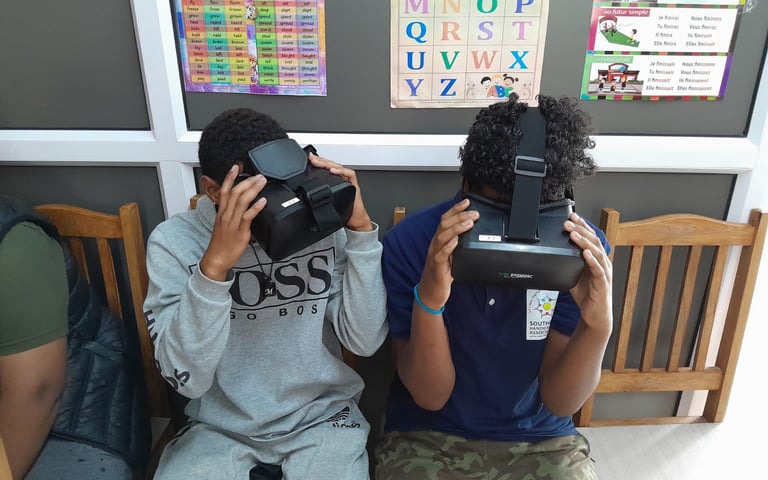
Guided VR learning experiences
Educational discussions marine ecosystems, conservation challenges, and sustainable behaviours
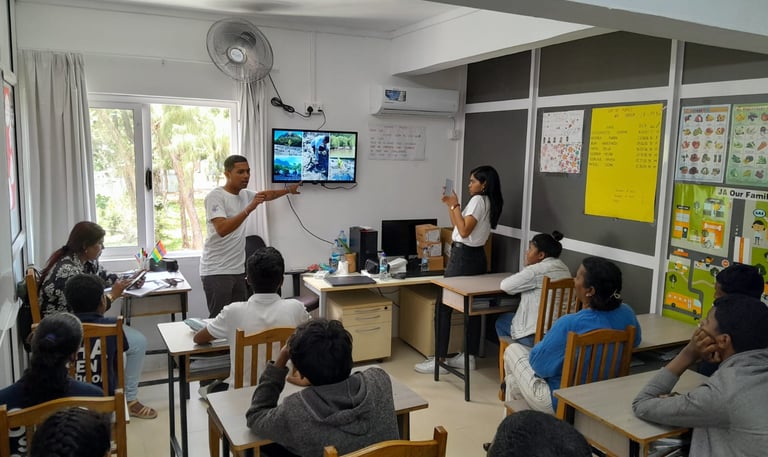
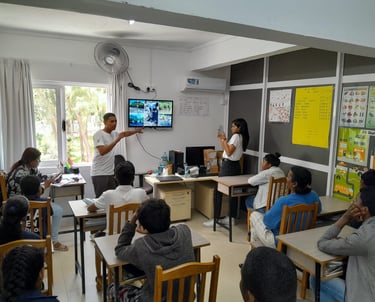
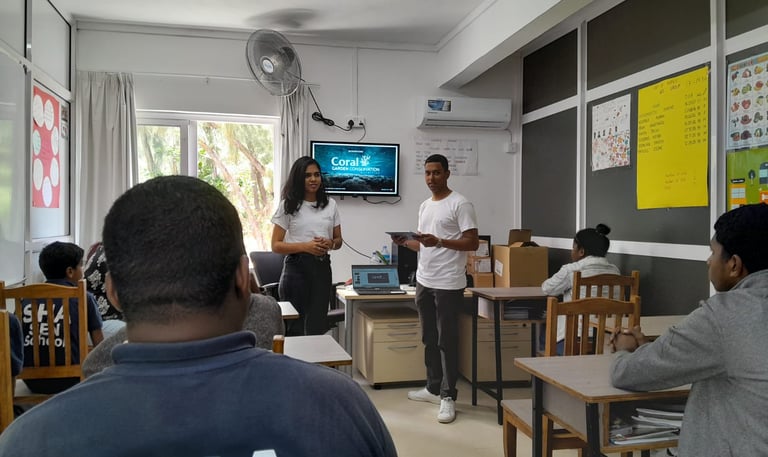
3. Pilot Implementation – Southern Handicap School (SHA).The AquaVR project was piloted at SHA:
Students experienced immersive VR sessions
Content adapted for accessibility
Sessions designed to engage differently-abled learners, simplify complex marine concepts, and encourage interaction and curiosity
Conclusion
The AquaVR project demonstrates how innovative digital tools can revolutionise environmental education, making marine ecosystems accessible, engaging, and inclusive. Through the joint implementation by CGC and EMCL, the project successfully:
Delivered immersive learning experiences
Increased awareness of marine conservation
Promoted inclusive education
Established a scalable model for digital outreach


This is an immersive 360° video. To enjoy the full interactive experience, please open it on YouTube, where you can move around the scene and explore the underwater environment.
This is an immersive 360° video. To enjoy the full interactive experience, please open it on YouTube, where you can move around the scene and explore the underwater environment.