The Liane Batatran (Morning Glory) Project:
A Community-Based Coastal Restoration Initiative in Mauritius
Project Overview
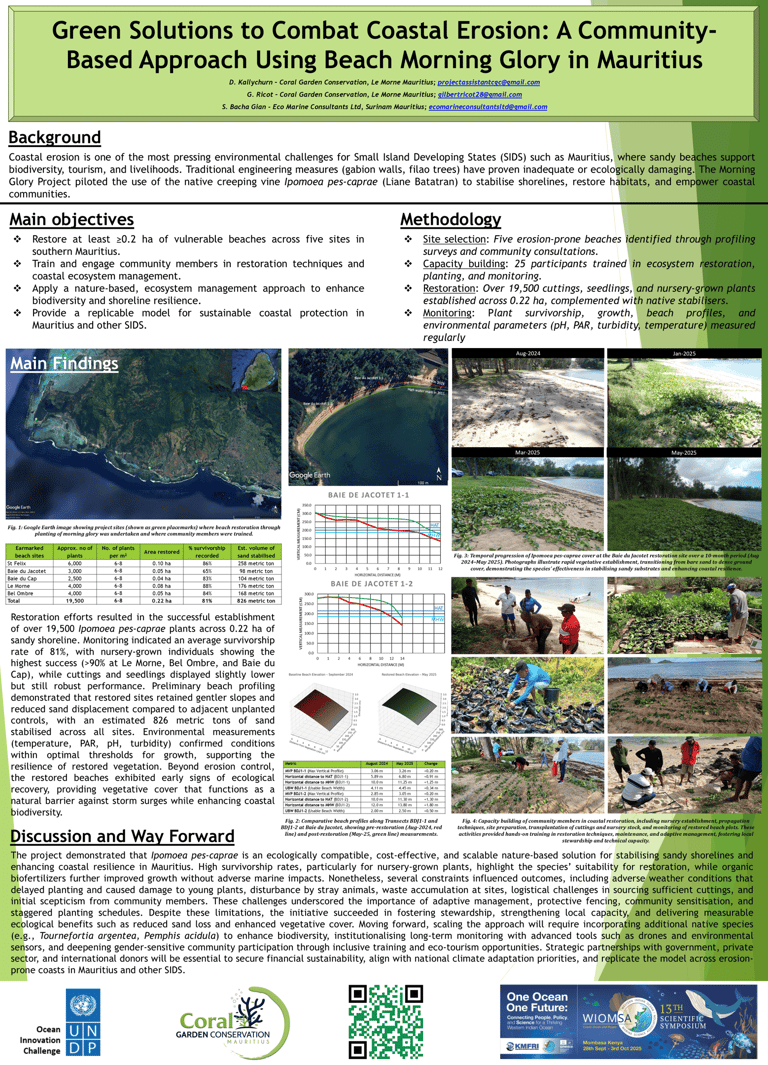
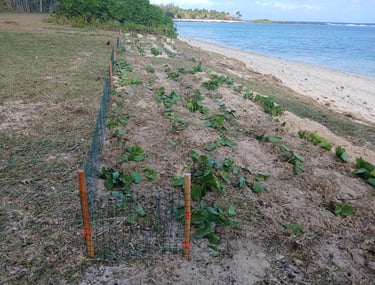
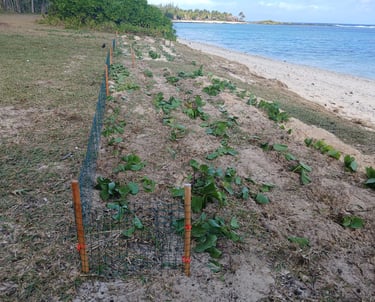
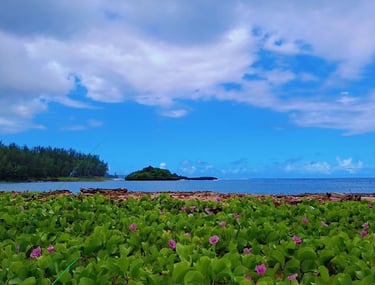
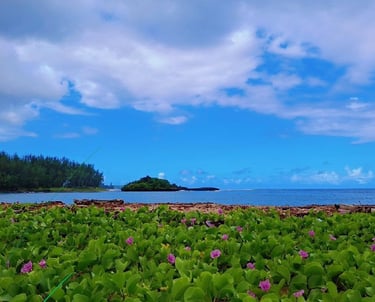
Mauritius, like many Small Island Developing States (SIDS), faces increasing pressure from coastal erosion driven by climate change, rising sea levels, and unsustainable human activities. Traditional engineering solutions such as gabions and rock revetments have often proven ineffective and environmentally damaging. In response, this project—jointly implemented by Coral Garden Conservation (CGC) and EMCL developed and applied a nature-based, ecosystem-driven approach, focusing on restoring beaches using Ipomoea pes-caprae (Liane Batatran), a native coastal plant known for its ability to stabilise sand and enhance coastal resilience
Objectives
The project aimed to deliver a scalable and sustainable coastal restoration model through:
Restoration of 0.2–0.3 hectares of degraded beaches across southern Mauritius
Training and engagement of 25 local community beneficiaries
Reduction of coastal erosion using nature-based solutions
Enhancement of biodiversity and coastal ecosystem health
Development of a replicable coastal restoration model for SIDS
Key Activities Implemented
Community sensitisation campaigns across coastal villages
Stakeholder engagement and beneficiary selection
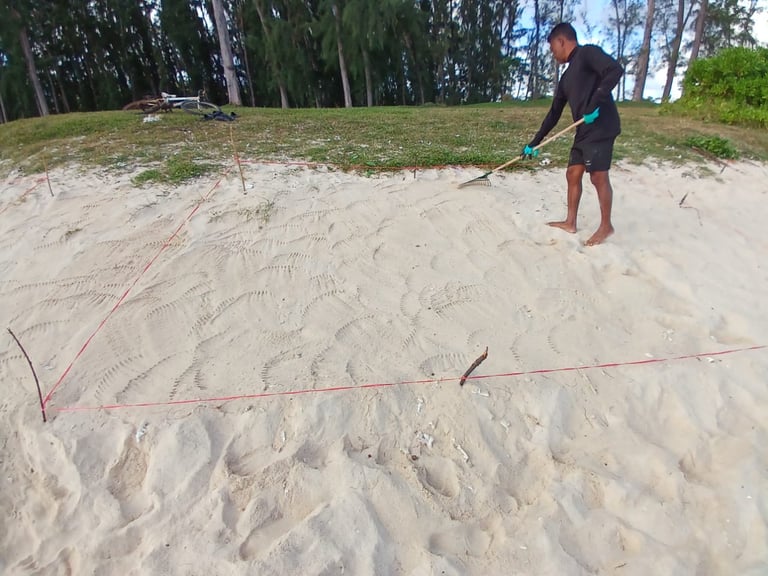
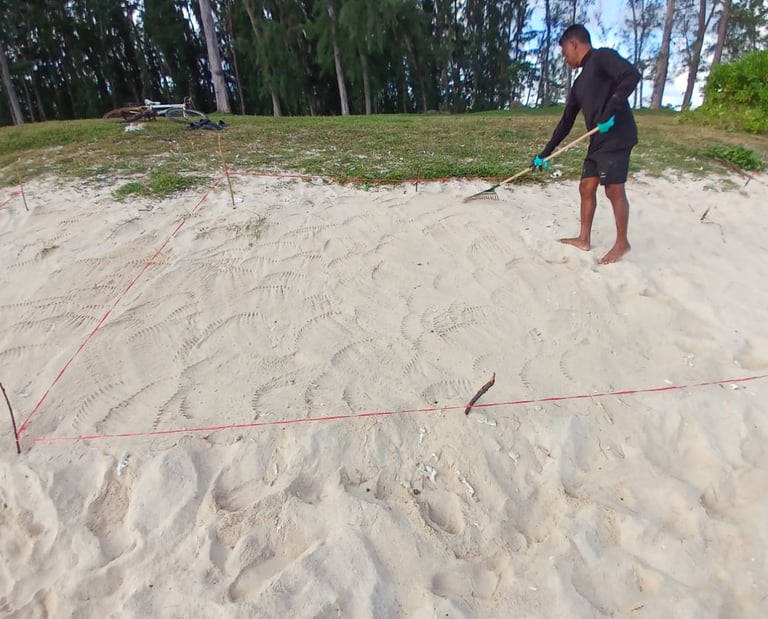
Beach profiling and environmental surveys
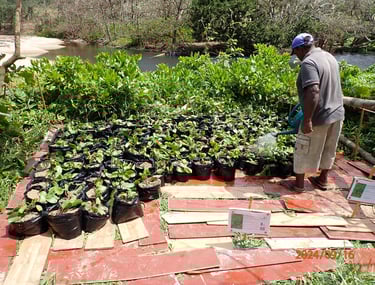
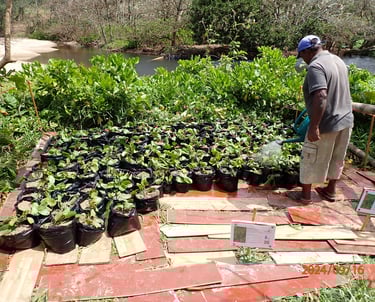
Nursery development and plant propagation
Sourcing of cuttings from donor sites
Deployment of ~19,000 plants across five sites
Application of organic biofertilizers (seaweed-based)
Establishment of monitoring protocols
Environmental & Socio-Economic Impact
Stabilisation of sandy beaches and reduction in erosion
Improved coastal resilience against storms and wave action
Enhanced biodiversity and habitat recovery
Contribution to carbon sequestration through vegetation
Alternative livelihood opportunities created
Increased environmental awareness among communities
Strengthened resilience of coastal-dependent households
Sustainability & Scalability
The project was designed for long-term sustainability and replication:
Strong community ownership ensures continuity
Low-cost and locally available materials
Integration with national coastal management strategies
Potential for scaling across Mauritius and other SIDS
Conclusion
The Liane Batatran Project demonstrated that nature-based solutions, when combined with strong community engagement and scientific oversight, can effectively address coastal erosion challenges. Through the joint implementation by CGC and EMCL, the project has successfully delivered a scalable, resilient, and sustainable model for coastal restoration, one that not only protects ecosystems but also strengthens livelihoods and community resilience in Mauritius.