The Octopus Project – A Community-Based Blue Economy Initiative
Project Overview
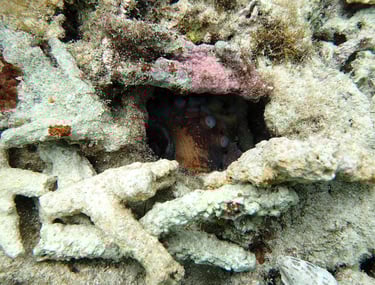
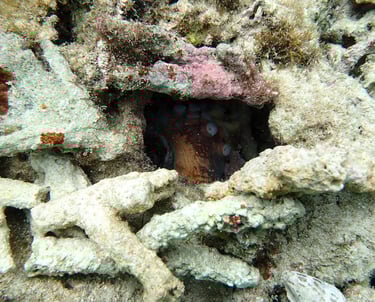
Coastal communities in Mauritius rely heavily on octopus fishing as a primary source of income. However, traditional fishing practices—particularly the breaking of coral reefs to extract octopi—have led to significant degradation of coral reef ecosystems, threatening biodiversity and long-term fishery sustainability. The Octopus Project was designed as an integrated solution to:
Reduce destructive fishing practices
Restore marine habitats
Enhance alternative and sustainable livelihoods
Empower coastal communities through training and participation
By combining ecological innovation with socio-economic development, the project contributes directly to building a resilient and sustainable Blue Economy in Mauritius.
Objectives
The project aimed to deliver a community-based and scalable solution through:
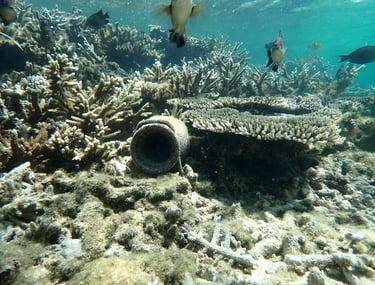
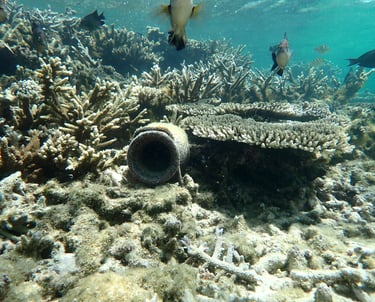
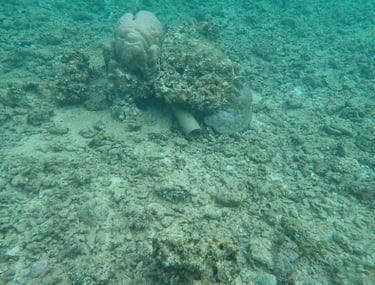
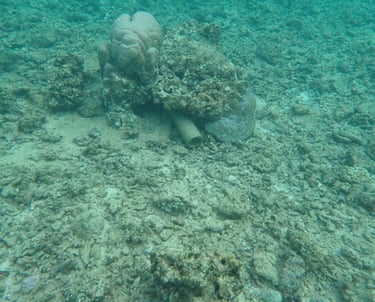
Development and deployment of eco-friendly artificial octopus dens
Reduction of coral reef damage caused by traditional fishing practices
Capacity building of local fishers and community members
Promotion of sustainable fishing practices
Strengthening stakeholder collaboration for long-term fisheries management
Creating alternative income-generating opportunities for coastal communities
Key Activities Implemented
Community sensitisation and outreach campaigns
Stakeholder mapping and beneficiary selection
Training of 30 community participants
Site surveys across 11 lagoon locations
Identification of experimental and control sites
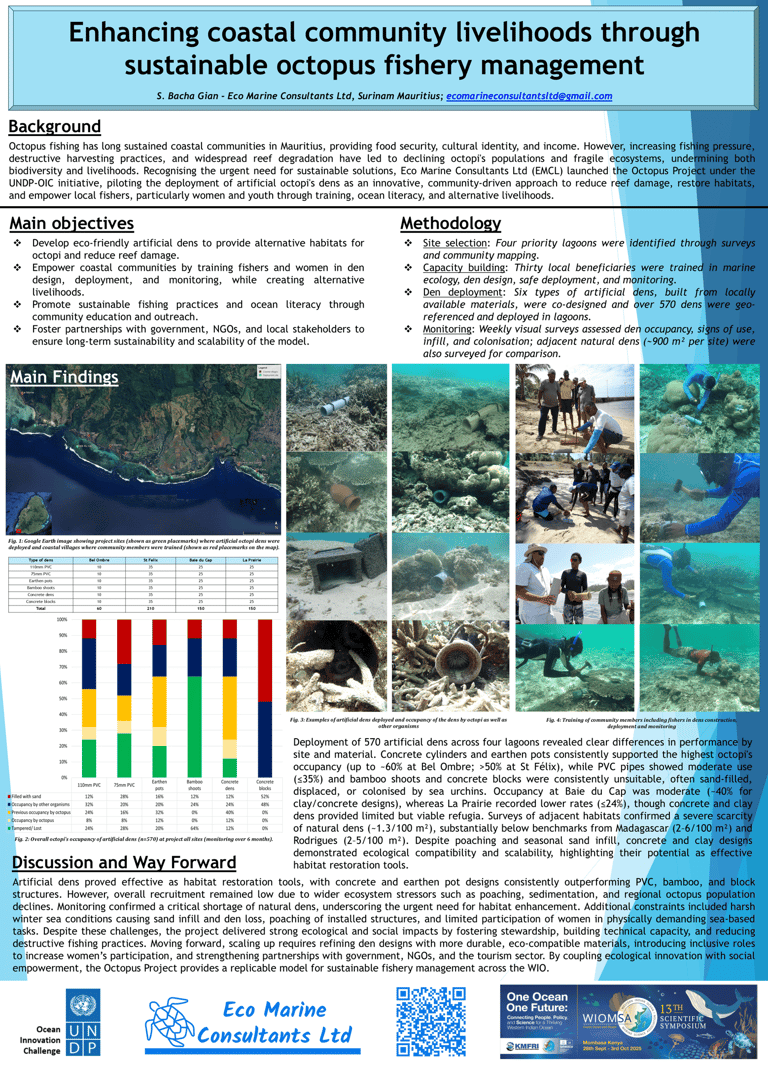
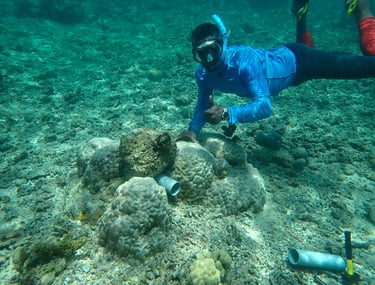
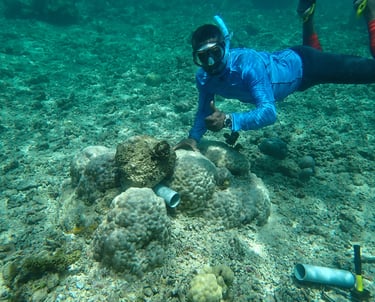
Construction of artificial octopus dens
Deployment of over 500 dens across multiple lagoon sites
Establishment of monitoring and evaluation framework
Environmental & Socio-Economic Impact
Reduction in coral reef destruction
Creation of artificial habitats supporting marine biodiversity
Improved understanding of octopus habitat usee.
Strengthened livelihoods for coastal communities
Increased resilience of fishing-dependent households
Empowerment of vulnerable groups, including unemployed individuals
Sustainability & Scalability
The project was designed as a replicable and scalable model:
Techniques can be easily transferred to other coastal regions
Strong community ownership ensures long-term sustainability
Integration with national fisheries management strategies
Potential for expansion into regional Blue Economy initiatives
Conclusion
The Octopus Project successfully demonstrated that innovative, community-driven approaches can address both environmental degradation and socio-economic challenges simultaneously. By combining marine conservation, livelihood development, and local empowerment, the project provided a strong foundation for sustainable octopus fisheries and a resilient Blue Economy in Mauritius.