Strengthening Coral Restoration Capacity in the Comoros
Project Overview
Following the success of Phase 1, Phase 2 of the VARUNA-AMP mentorship program focused on consolidating and operationalising coral restoration capacity within the Mitsamiouli-Ndroudé Marine National Park in the Union of Comoros. This second phase aimed to move beyond basic training and ensure that local practitioners are able to independently implement, manage, and scale coral restoration interventions, using proven field-based methodologies adapted to local environmental and logistical conditions. The project was implemented through a South-South knowledge exchange between Mauritius and the Comoros, led by Eco Marine Consultants Ltd (EMCL) and Coral Garden Conservation (CGC).
Objectives
The main objective of Phase 2 was to strengthen operational autonomy and technical capacity of Comorian practitioners in coral restoration. Specific objectives included:
Enhancing hands-on skills in coral transplantation techniques
Strengthening field capacity for installation and stabilisation of spider frames
Developing standardised protocols for coral handling, fixation, and maintenance
Establishing a simple but effective monitoring framework
Supporting the development of a replicable coral restoration model within the marine park
Reinforcing regional collaboration between Mauritius and the Comoros
Training & Implementation
Under EMCL’s guidance, participants received a comprehensive blend of theoretical learning and field practice:
Online modules on reef ecology, threats to coral reefs, and restoration principles.
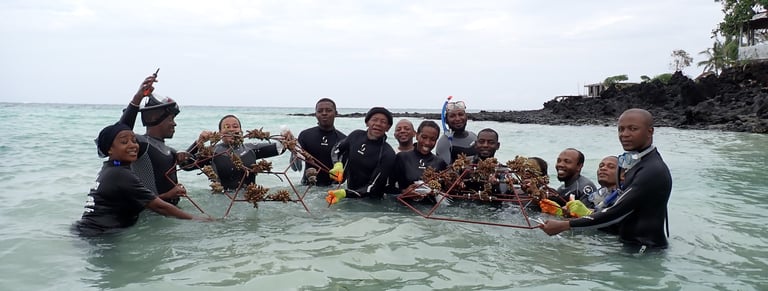
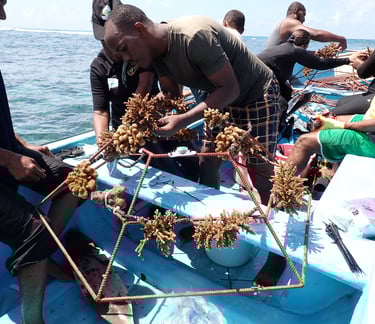
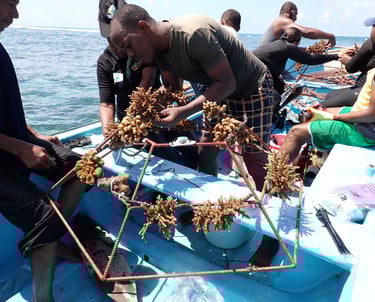
Practical workshops on the construction of nursery frames and the deployment of coral fragments underwater.
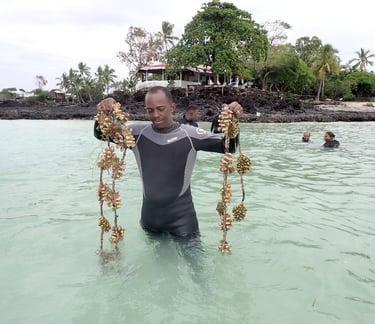
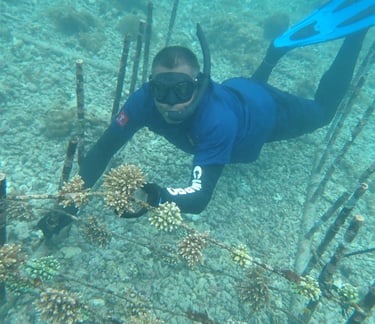
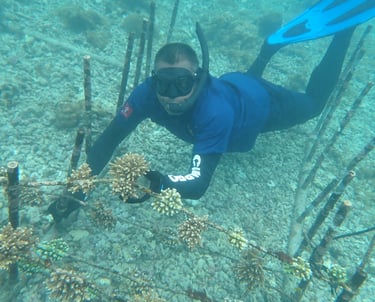
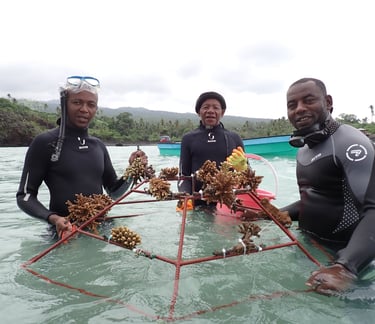
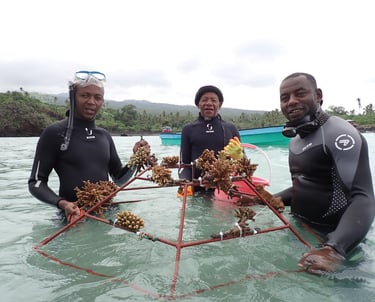
Field exercises for the installation of spider-frame nurseries and the transplantation of healthy coral colonies to target reef sites.
Monitoring sessions focusing on growth measurement, fragment survival, and maintenance techniques.
Results & Impact
Successful creation of coral gardens in the Mitsamiouli-Ndroudé Marine Park.
High adaptation and survival rates in coral gardens.
Strengthened local expertise — participants now capable of independent garden creation, management and monitoring.
Promoted regional cooperation between Mauritius and Comoros for reef restoration knowledge exchange.
Community & Collaboration
The project involved park managers, eco-guards, and local fishers in every stage ensuring community ownership and gender inclusivity. Women represented 40% of the trainees, empowered as key actors in marine conservation.
Looking Ahead
This project highlights the value of peer-to-peer mentorship and regional collaboration, demonstrating how practical knowledge transfer can accelerate marine conservation efforts in Small Island Developing States (SIDS). The collaboration between Mauritius and the Comoros will continue through ongoing technical exchanges, remote support and monitoring, as well as future joint project development and funding opportunities